Heart of Darkness Memes, Explained
Joseph Conrad's 'Heart of Darkness' has left a significant mark on literature and popular culture, often referenced for its exploration of colonialism and the human psyche. The novella's most famous adaptation is Francis Ford Coppola's film 'Apocalypse Now,' which transposes the story to the Vietnam War, further solidifying its cultural footprint. Key scenes and lines from both the book and the film have been referenced in numerous works, highlighting themes of darkness, madness, and moral ambiguity. The novella's influence extends into various media, including film, literature, and online discussions, where its themes continue to resonate with contemporary audiences.
- Meme 1 of 3
The Horror! The Horror!
Kurtz's last words
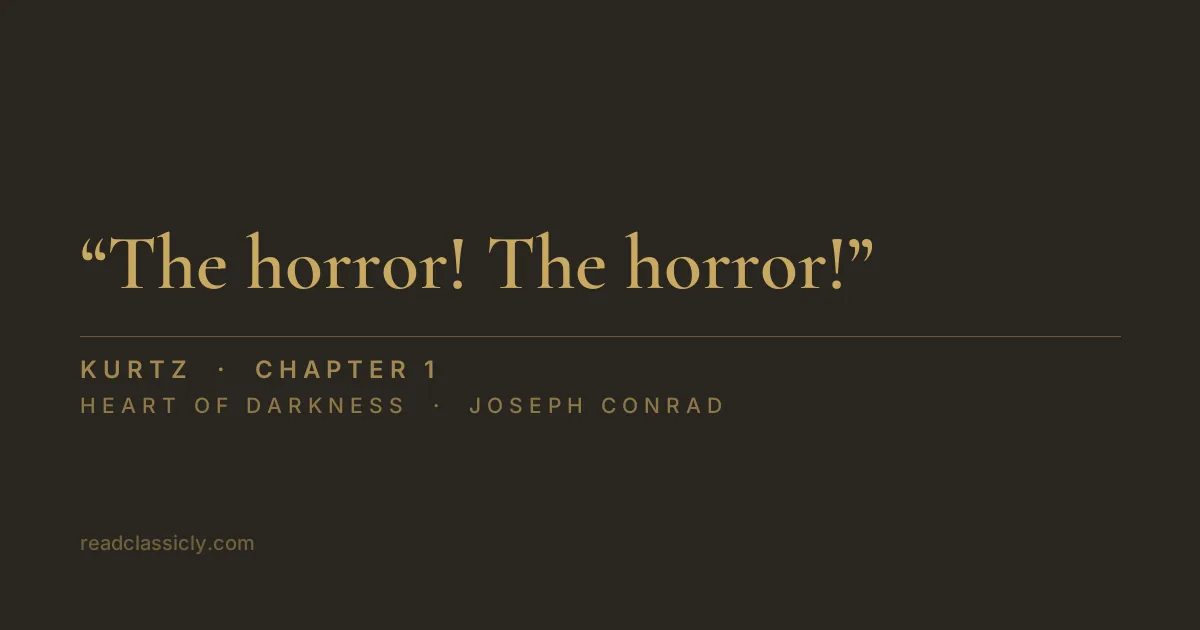 The scene
This scene occurs near the end of the novella as Kurtz lies dying. His final words, 'The horror! The horror!' encapsulate the darkness and despair he has encountered. This moment is pivotal, reflecting Kurtz's realization of the atrocities and the darkness within himself.
Watch this scene on YouTube →The line in the book“The horror! The horror!”Kurtz, Chapter 1, Heart of Darkness
Read the full passage and analysis →How the meme is used todayIn popular culture, 'The horror! The horror!' is often quoted to express a realization of something deeply disturbing or morally troubling, frequently used in discussions about ethical dilemmas or dark revelations.
What it actually meansIn the book, Kurtz's exclamation reflects his confrontation with the darkness of his actions and the inherent evil within humanity. It symbolizes the ultimate realization of the abyss he has descended into, both physically and morally.
- Meme 2 of 3
A Heart of Darkness
Journey into the unknown
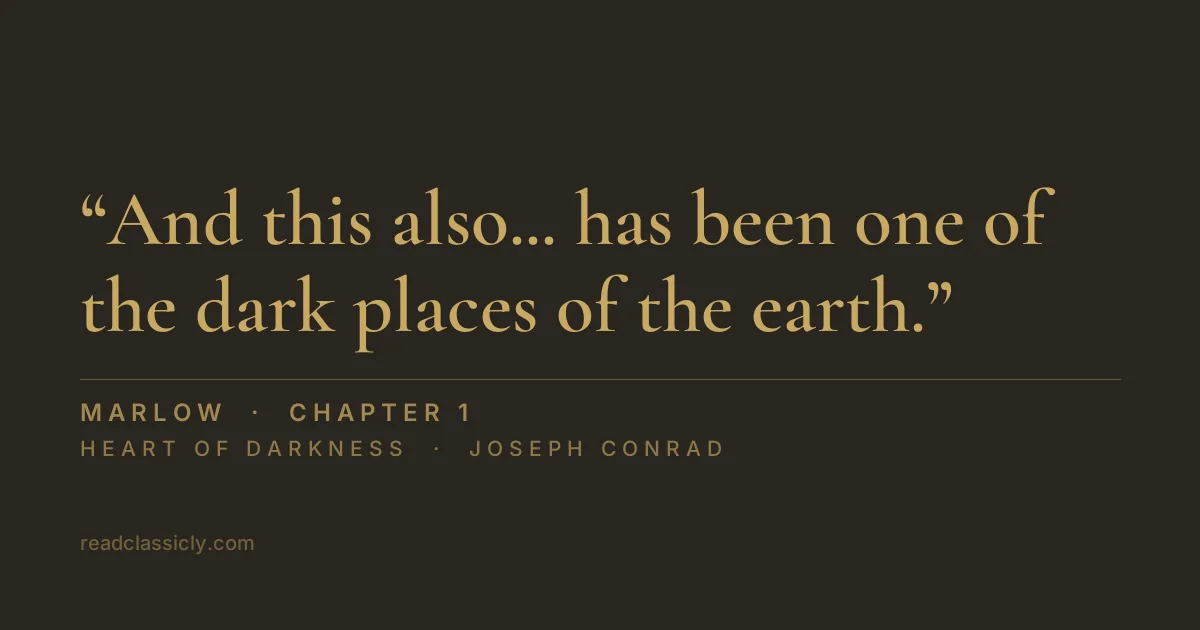 The scene
The opening of the novella describes the Thames River as a starting point for exploration. Marlow reflects on the river as a passage into the unknown, symbolizing the journey into the 'heart of darkness' both geographically and metaphorically.
Watch this scene on YouTube →The line in the book“And this also... has been one of the dark places of the earth.”Marlow, Chapter 1, Heart of Darkness
Read the full passage and analysis →How the meme is used todayThis concept is often referenced in discussions about venturing into morally or psychologically challenging situations. It is used metaphorically to describe journeys that lead to self-discovery or confrontation with one's inner darkness.
What it actually meansIn the novella, the 'heart of darkness' represents both the African Congo and the darkness within human nature. Marlow's journey is not just physical but also an exploration of the moral and ethical darkness present in colonial exploitation.
- Meme 3 of 3
The River as a Snake
The hypnotic pull of the Congo
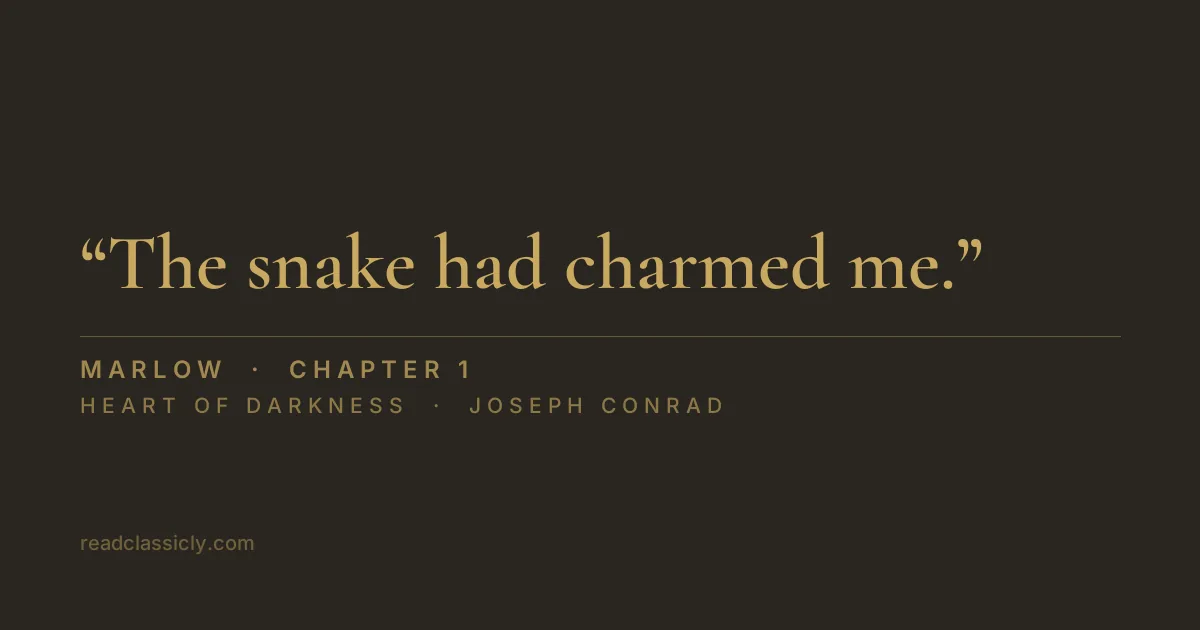 The scene
Marlow describes the Congo River as a snake, emphasizing its winding and dangerous nature. This imagery captures the river's allure and the perilous journey it represents, drawing Marlow deeper into the continent and its mysteries.
Watch this scene on YouTube →The line in the book“The snake had charmed me.”Marlow, Chapter 1, Heart of Darkness
Read the full passage and analysis →How the meme is used todayThe metaphor of the snake is used to describe situations or people that are alluring yet dangerous. It signifies the seductive nature of something that ultimately leads to peril or moral compromise.
What it actually meansThe snake imagery in the novella symbolizes the seductive yet treacherous nature of the Congo and the colonial enterprise. It reflects the irresistible pull of adventure and the subsequent moral corruption that follows.
The novel behind the memes
Every meme on this page comes from the same short novel: Heart of Darkness by Joseph Conrad, published in 1899. The book is in the public domain. You can read it on the site as part of a free 12-month classics plan, with a daily page goal that takes around fifteen to twenty-five minutes a day.
Reading a classic to learn English?
readClassicly has a free plan for English reading for beginners: graded classic stories with tap-to-define words, audio, and a short quiz after each one. Start at your level and build up to full books like this one. If you are just starting, begin with the short English stories for beginners.